
Why Do Warm Inquiries Go Cold Before They Ever Become a Sale?
What Happens Between a Warm Inquiry and a Lost Sale?
A warm inquiry cools the moment nobody owns the response. The longer it sits unanswered, the more the prospect assumes you're too busy, too disorganised, or simply not that interested.
According to lead generation data compiled by SeoProfy, 80 percent of new leads never turn into paying customers, and much of that loss happens quietly, long before anyone notices a problem exists. You've built a business on relationships, on remembering a client's name and their last job, so it's easy to assume warm inquiries are safe in your hands. But inquiries rarely go cold because someone stopped caring. They go cold because nobody was clearly responsible for the next move.
What Should You Know About Warm Inquiries Turning Cold?
Warm inquiries go cold before they become sales when a business relies on memory instead of a system to track who has been contacted, what was promised, and when the next follow-up is due, so interest fades while everyone assumes someone else has it handled.
No single owner for follow-up means no one follows up.
Interest fades fastest in the first hour, not the first week.
Family and staff roles overlap, so inquiries fall between them.
Why Does a Missed Follow-Up Feel Like a Failure?
A missed follow-up rarely registers as an admin slip to the person at the top. It registers as proof she's too stretched to hold the business together the way she always has.
When you're still the one everyone calls first, a cold inquiry doesn't feel like a process gap, it feels like something you personally let slip. The business then stays dependent on your attention rather than on any structure built to work without you in the room.
That pressure shows up in small, telling ways: a voicemail left unreturned because the right quiet moment never came, or a handwritten note on the counter that nobody actually actions. Left alone, those gaps stop being one-off slips and start turning into patterns, and patterns are where the real risk lives.
What Follow-Up Patterns Quietly Let Warm Leads Go Cold?
Watch for the inquiry that gets a warm reply on day one and then silence, and the family member who assumes a staff member already called back, when nobody did.
Trace your last ten inquiries and work out exactly who touched each one and when. If the honest answer is "it depends who picked up the phone that day", the business is running on luck, not structure. Notice too how often a second or third follow-up never happens, because the first contact felt like enough at the time.
The riskiest pattern is duplication and gaps; one lead chased by two people while another gets chased by none. Over time, this doesn't just cost sales, it teaches prospects your business is inconsistent, exactly the opposite of the reputation you've spent decades building. Spotting the pattern is the easy part. Knowing how common it is elsewhere is what makes fixing it feel urgent rather than optional.
How Many Warm Leads Disappear Before Anyone Follows Up?
Across the lead generation industry, consistent follow-up is one of the hardest parts of the entire sales process, and most businesses lose the race before it even starts.
SeoProfy 2026 lead generation report found that 41 percent of businesses say following up with their leads is a genuinely difficult task, not a rare exception but the norm across industries. That figure confirms the gap inside your business is structural, and many companies share it.
The businesses pulling ahead aren't working harder, they're working to a defined cadence: who contacts a lead, when, and what happens if there's no response. For a family business juggling staff and family roles around the same inquiries, that structure matters even more, because without it, responsibility simply evaporates into "someone will handle it."
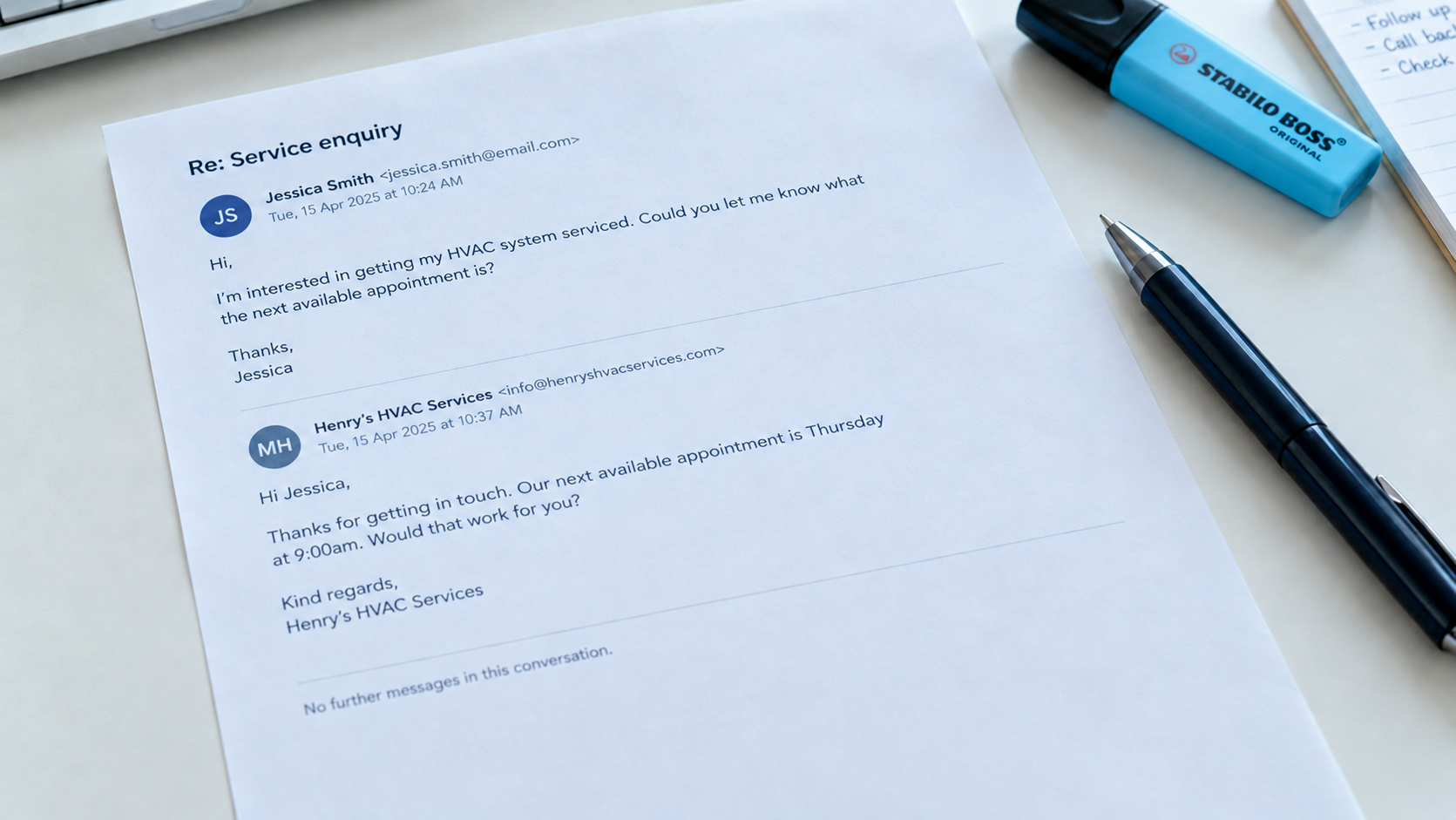
How Does Structure Stop Warm Inquiries from Going Cold?
Warm inquiries stop going cold once there's a visible structure around them: a named owner, a set timeframe, and a record anyone can check, not just the person who happens to remember.
The instinct when leads go cold is to push harder, more calls, more reminders, more pressure on whoever already feels stretched thin. That rarely works, because the problem was never effort, it was the absence of a container to hold the effort in place. Stability has to come before any push for more volume or more marketing spend.
This is where Macro Momentum's Scaffold™ principle applies directly. It holds that a business needs several things in place at once: clear communication, transparent decision-making, defined roles, and clear boundaries around who decides what, before growth efforts like lead follow-up can hold steady. Applied here, that means a written record of every inquiry, a named person responsible for each one, and a clear rule for when a lead gets escalated or released.
(Epic Leads, Chapter 1) makes a similar point about the customer journey: each stage, from first awareness to final decision, needs its own deliberate response, not one generic follow-up message. Mapping that journey against who owns each stage turns a vague intention to "follow up better" into something the whole team can actually run, family members and long-time staff alike.
What Are the Stages of Building a Follow-Up System That Holds?
This isn't a full CRM overhaul. It's three deliberate moves that give every warm inquiry a visible owner and a deadline, without adding a system nobody has time to learn.
Naming Who Owns the First Call
One person, not a rotating guess, takes responsibility for every new inquiry within a set number of hours.
Timing the Follow-Up Before Interest Fades
A written cadence sets exactly when the second and third contact happens, so nothing depends on memory.
Writing the Cadence Down So It Survives You
The process gets documented somewhere everyone can see, so the business runs the same way whoever answers the phone.
Where Does the Change Show Up Once Every Inquiry Has a Named Owner?
Inquiries stop slipping through family and staff roles once someone is clearly accountable for each one, and that clarity shows up in the numbers within weeks.
Owners who put this structure in place typically see their follow-up rate climb fast, because the gap was never interest, it was ownership. Conversations that used to stall at "I'll check and get back to you" start closing in the same call, because the information and the authority sit with one person.

What Do Family Business Owners Ask About Inquiries Going Cold?
Most questions about cold inquiries come back to ownership and timing, not technology or talent.
Is it too late to fix leads that already went cold?
No. A clear process protects every new inquiry from today, even if past ones are gone.
Do I need new software to track follow-ups?
No. A shared document works, as long as everyone uses it the same way.
What if my team resists being tracked?
Frame it as protecting the sale, not policing effort, and most resistance settles quickly.
How fast should the first response really be?
Same business day, ideally within a few hours, before interest has room to fade.
Who should own this if I can't do it myself?
One named person, family or staff, works better than the job floating between whoever's free.
Who Builds This Follow-Up Structure When the Business Day Takes Over?
Most owners can sketch this system on a single page. Far fewer can keep it running once invoices, rosters, and family conversations crowd back into the day, which is exactly where outside structure earns its place.
Macro Momentum works alongside family business owners through our lead generation pillar, mapping exactly where inquiries are currently falling through, assigning clear ownership across family and staff, and building the follow-up cadence into a system the team can actually sustain. We're not adding software for its own sake, we're making sure the warmth you've already built with every customer survives the handoff between first contact and signed job.
What Does the Business Look Like Once Inquiries Stop Going Cold?
Getting enquiries is one thing. Turning them into paying customers is another.
In a busy family business, it's surprisingly easy for a potential customer to slip through the cracks. An enquiry comes in, someone intends to follow it up, but other priorities take over. By the time anyone gets back to them, they've already gone elsewhere.
The solution isn't necessarily generating more leads. It's making better use of the opportunities already coming into the business.
With clear responsibilities, a reliable follow-up process and the right systems in place, businesses can respond faster, keep track of potential customers and convert more enquiries into sales.
At Macro Momentum, we help family businesses improve lead generation, streamline follow-up and build practical systems that support sustainable growth.
Find out more at macromomentum.com.